Seventy years of us, in one quilt
Quilters are told to sew a label into the corner: name, date, place. My grandmother never did. "The quilt knows," she said. It took her five years to piece — not because it was difficult, but because she refused to buy fabric for it. Every patch had to have lived with the family first. So this quilt is not cotton; it is biography, machine-washable.
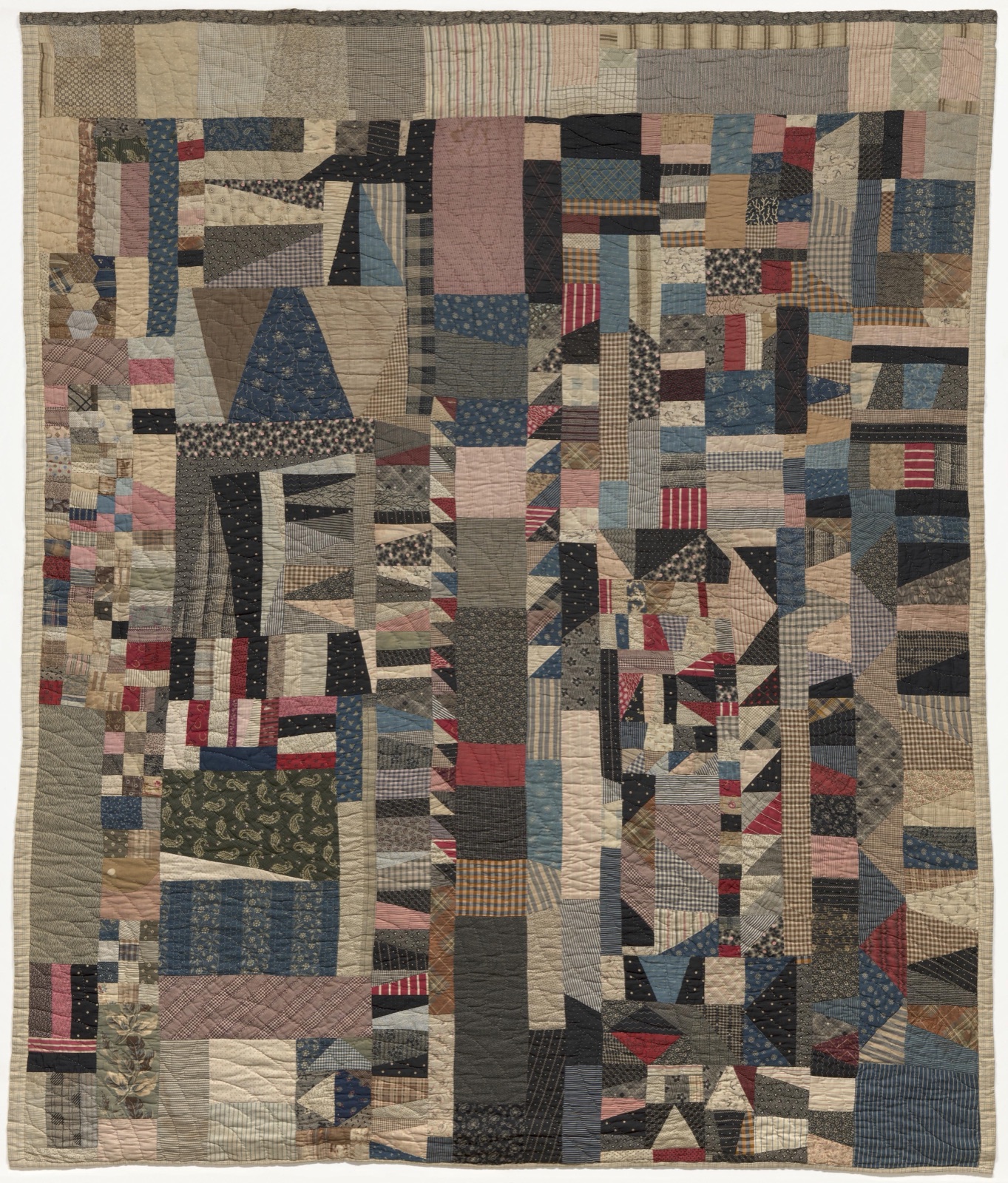
The dark plaids were my grandfather’s work shirts from the shipyard — you can still find the pinholes from his union badge if you look at the third row. The striped shirting was the kitchen curtains from the Fenwick Street house. The soft pink squares, worn nearly smooth, were my father’s baby clothes, from the year he learned to walk. And the cream patches with the small flowers were her own mother’s Sunday dress — she cut it the winter after the funeral and said nothing while she did it.
There is one patch nobody could ever identify — the green paisley, left of center. At her ninetieth birthday she finally confessed: it was a dress she wore on a date with a man who was not my grandfather, in 1946. "It was a very good dress," she said, "and a very dull man."
She finished it in the spring of 1953 and it has been on a bed or a lap ever since — seventy years of fevers, movie nights, and one memorable tent. The binding has been redone twice. Quilts are the only heirlooms that are supposed to wear out, which is why their stories vanish faster than they do.
So this is the label she never sewed. It hangs on a small card from the quilt rack, and if you have just scanned it — at a family thing, or in a house you inherited, or at an estate sale where someone made a terrible mistake — now you know: you are not holding fabric. You are holding the Fenwick Street curtains, a shipyard, a walking lesson, a Sunday dress, and one very dull man. Wash cold. Line dry.